
Introduction: The Data Behind the Difference
In our previous article, “OPEN ACCESS™: A New Standard for Fire Alarm Signal Delivery in Canada,” we explored how modernizing the signal path can improve speed, reliability, and accountability.
But beyond theory and system design—what does the data actually show?
A comprehensive third-party study conducted by Leber Rubes provides a clear answer: how fire alarm signals are delivered has a measurable impact on response time—and ultimately, life safety outcomes.
Download the full study here:
The Study: Real-World Testing of Signal Delivery Methods
The Leber Rubes study evaluated 95 live fire alarm tests across facilities in Ontario, comparing two approaches:
- Traditional central station monitoring
- Electronic direct-to-fire department notification (OPEN ACCESS™)
The goal was simple: measure the total time from alarm activation to fire department dispatch.
The Results: A Measurable Difference
The findings were significant:
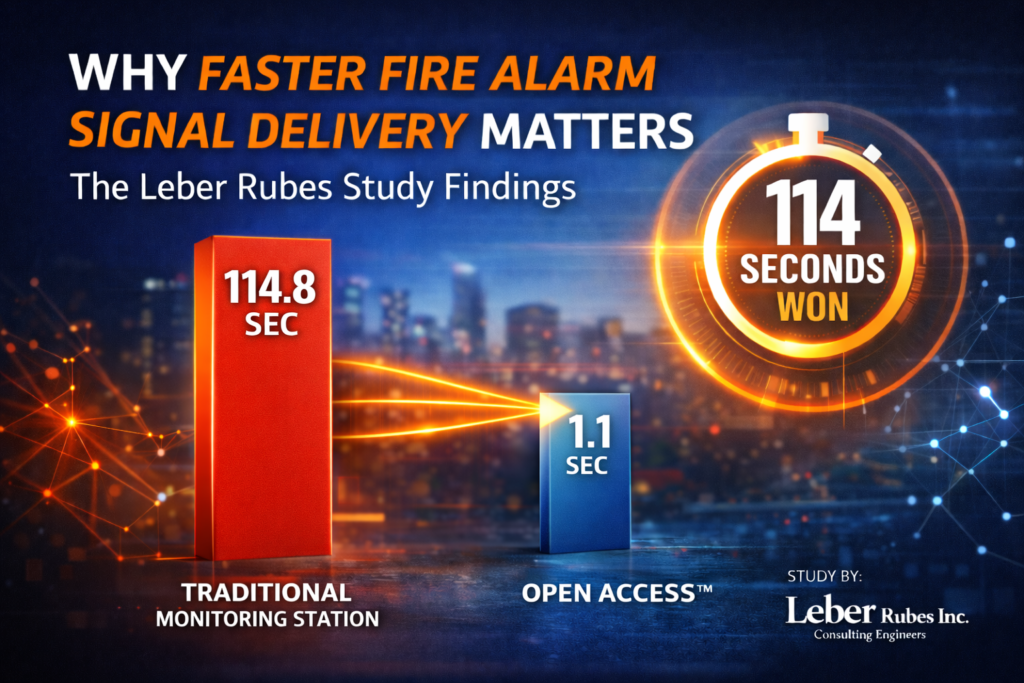
- OPEN ACCESS™ average total response time: 30.1 seconds
- Note: ~29 seconds can be attributed to the delay in transmission from the site to the corresponding monitoring station. OPEN ACCESSTM signal delivery from monitoring station to FD ~ 1 second. Current transmission methods such as IP and Cellular are shown to take ~1-3 seconds versus ~29 seconds at the time of the study.
- Central station average response time: 144.8 seconds
- Time savings: 114.7 seconds (nearly 2 minutes faster)
That means traditional monitoring took nearly five times longer to get fire services dispatched.
In life safety, that difference isn’t incremental—it’s critical.
Where the Time Is Lost
The study highlights a key issue with traditional signal paths: layers introduce delay.
With central station monitoring, the process typically includes:
- Signal receipt by the monitoring station
- Operator review and verification
- Manual call to the fire department
- Data entry at the communications centre
Each step adds time—and introduces potential for error.
By contrast, OPEN ACCESS™ delivers signals directly into the fire department’s computer-aided dispatch system, eliminating unnecessary hand-offs and enabling immediate action.
Reliability Matters Just as Much as Speed
Speed wasn’t the only concern uncovered in the study.
- 6.8% of alarms were never reported to the fire department
- 60.8% of alarms were not reported within 90 seconds
- Some alarms took up to 10 minutes to be communicated
In several cases, delays occurred because operators attempted to call the premises before contacting emergency services—introducing unnecessary risk.
These findings reinforce a key point:
manual processes create variability—and variability creates risk.
Why 114 Seconds Changes Everything
The study doesn’t just show faster signal delivery—it demonstrates real-world impact.
Earlier notification allows fire departments to intervene sooner in the fire growth curve, increasing the likelihood of:
- Saving lives
- Reducing property damage
- Containing incidents before escalation
The study’s time/temperature relationship shows how quickly fire conditions deteriorate—even within minutes.
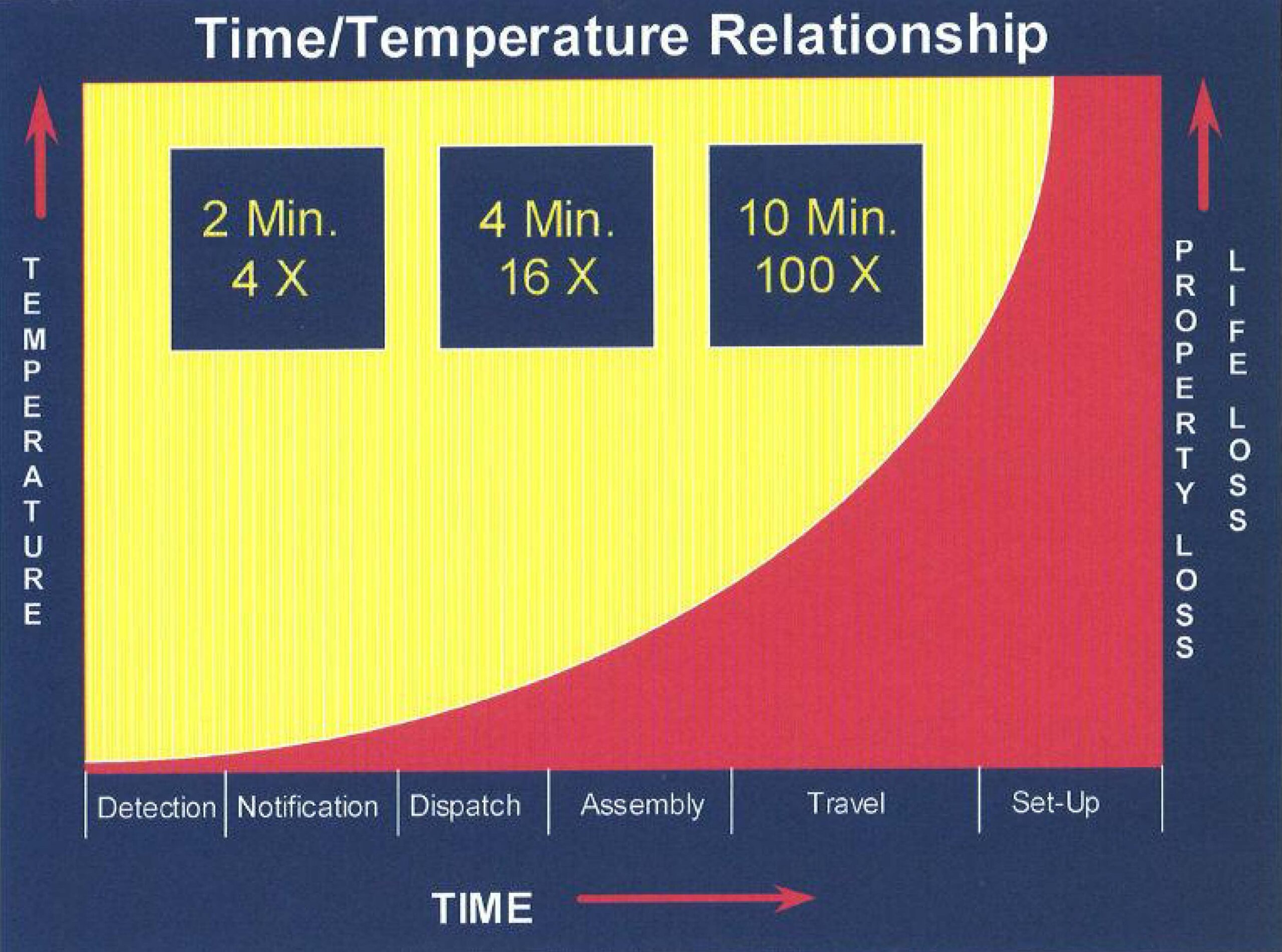
A two-minute delay can dramatically change the outcome of a fire event.
A More Efficient Path Forward
The study also highlights something often overlooked: improving response times through traditional means is expensive.
To achieve similar time savings through infrastructure alone, municipalities would need:
- Additional fire stations
- More personnel
- Significant capital investment
Electronic signal delivery provides a far more efficient solution—improving response times without requiring major physical expansion.
How This Supports the OPEN ACCESS™ Model
The findings from the Leber Rubes study directly support the principles behind OPEN ACCESS™:
- Reduce hand-offs → faster signal delivery
- Automate communication → fewer errors
- Enable direct integration → improved dispatch efficiency
OPEN ACCESS™ was built around these exact concepts—delivering fire alarm signals quickly, reliably, and in alignment with modern expectations for life safety systems.
Conclusion: Proven, Not Theoretical
The need for faster, more reliable fire alarm signal delivery isn’t just a concept—it’s backed by real-world data.
The Leber Rubes study makes it clear:
How a signal is delivered directly impacts how quickly help arrives.
And in life safety, that’s what matters most.
Continue the Conversation
If you haven’t yet, read our foundational article:
OPEN ACCESS™: A New Standard for Fire Alarm Signal Delivery in Canada
Or reach out to our team to learn how modern signal delivery can improve performance across your operations.